

There’s a conversation happening in boardrooms and Human Resource departments right now that goes something like this: How do we prepare our leaders for the AI era?
The answers tend to cluster around the same themes. Upskilling. Digital fluency. Change agility. Learning to work alongside LLMs. All of it is reasonable. Thing is, most of it is missing the point.
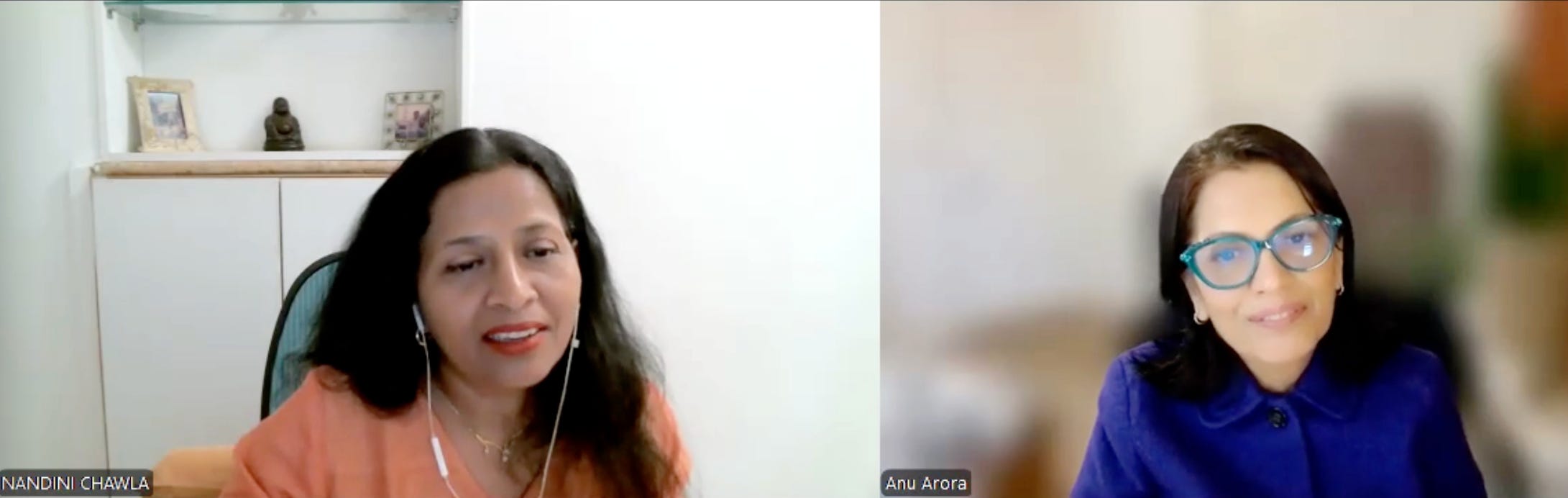
I recently spoke with Nandini Chawla, CEO of TV Rao Learning Systems. With 25 years in leadership development, as a PCC-certified coach, and one of the most grounded thinkers I’ve encountered on what actually makes organizations work, Nandini’s answer to the question of how to prepare leaders in the AI era really surprised me.
Go back to basics, she said. The most fundamental of all is: how can we be more human?
The Case for Connection
As artificial intelligence becomes more embedded in the fabric of organizational life — inserted into the tools we use, used to help drive the decisions we make, developing the processes we run — the one thing it cannot replicate is genuine human connection.
And connection is important. People know when they are faced with inauthenticity. And they reject it. They don’t engage with it. No matter how seamless the interface or how sophisticated the system, people can feel the difference — and they respond accordingly.
Nandini made an observation that really made me think. She said we are in a moment of collective fragility. After the emergent period of the pandemic, people came back to work still burdened by things they hadn’t fully processed during that time.

These unprocessed feelings are still helping foment the uncertainty that people are experiencing in an AI-disrupted economy. The implied contract — not to mention the psychological contract — between organizations and their people is more fragile than it was even just five years ago.
Add to that mix businesses that are doubling down on automation with their foot on the gas for maximum velocity, hurtling into a brave new world. One that’s simultaneously pulling back on real-world human infrastructure. The pressure to move fast is real. But so is the cost of moving fast without strong direction and trusted leadership.
Leaders Who Matter Navigate
The leaders who will matter most in the next decade are not the ones who understand AI the best. They are the ones whose teams trust them enough to believe in what’s actually happening and to believe in their ability to navigate uncertainty together.
That kind of trust is something built slowly through consistent behavior over time – through difficult conversations handled with care, the admissions of not-knowing everything, and decisions made with enough transparency that people feel included rather than subject to outcomes beyond their control.
Prioritizing Gratitude
Finding your way when the road ahead is unclear demands emotional stability and mindfulness. Nandini’s firm, TV Rao Learning Systems, is now including elements of gratitude in its 360-degree feedback tools. When you embed gratitude into the systems people actually use, you invite them to slow down and genuinely reflect on it. When something as seemingly intangible as gratitude can turn into a measurable data point, it’s a signal that an organization actually values the full humanity of its workforce, not just their output.

The Deeper Challenge
We’ve spent decades making the case that soft skills are, in fact, hard skills — and that something like emotional intelligence has real, demonstrable ROI. We’ve emphasized the importance of company culture as a key driver of performance, not just a byproduct of it. And we’ve done that work knowing we were always swimming against a tide that favors what’s measurable over what matters.
But what we’re seeing now is that when things get crunchy and uncertain, organizations are still cutting their investment in human infrastructure first — coaching, training, development programs, the reflective time that leaders and leadership teams are given to aspire and inspire.
A Strategic Miscalculation
The instinct to make budget by cutting headcount is understandable, but it’s also increasingly a strategic miscalculation.
The irony is that AI should be making it easier for us to develop leaders, not harder. The more we automate the transactional, the more we can focus on the qualities and conditions of leadership that can make a real and lasting contribution to the organization. We should be gaining time, space and bandwidth for deep organizational development — not losing the will to invest in it.
When the technological playing field levels out — which it inevitably will — organizations will be competing on the quality of their leaders and in their ability to navigate uncertainty. The differentiator won’t be who adopted the best tools the fastest. It will be those who built the most trusted and capable leaders.
Leaders who stay intentionally, intuitively, and stubbornly focused on workforce development are not behind the curve. They are ahead of it.
If you’re ready to hear more about what Nandini had to say about leadership development in the world of AI, download my podcast at your favorite place to catch up like Apple or YouTube.

Mindful Minute: What are you seeing in your own organization? Is the investment in human leadership infrastructure holding strong or is training and development the first thing on the chopping block? I’d love to hear about your experiences in the comments.
Thank you for this excellent article and much-needed dialogue. I would add/reemphasize that our species and society thrive on human connection. I agree that we need to use AI as tool to enhance productivity, but not to replace humans.
Good stuff here.