

I lay awake most nights at the Sun and Sand Hotel in Mumbai.
Outside, the city did what Mumbai always does — it refuses to sleep. But inside that room, I was caught in a loop I could not escape.
How did I miss this?
How did I not know?
I have practiced yoga for twenty-five years.
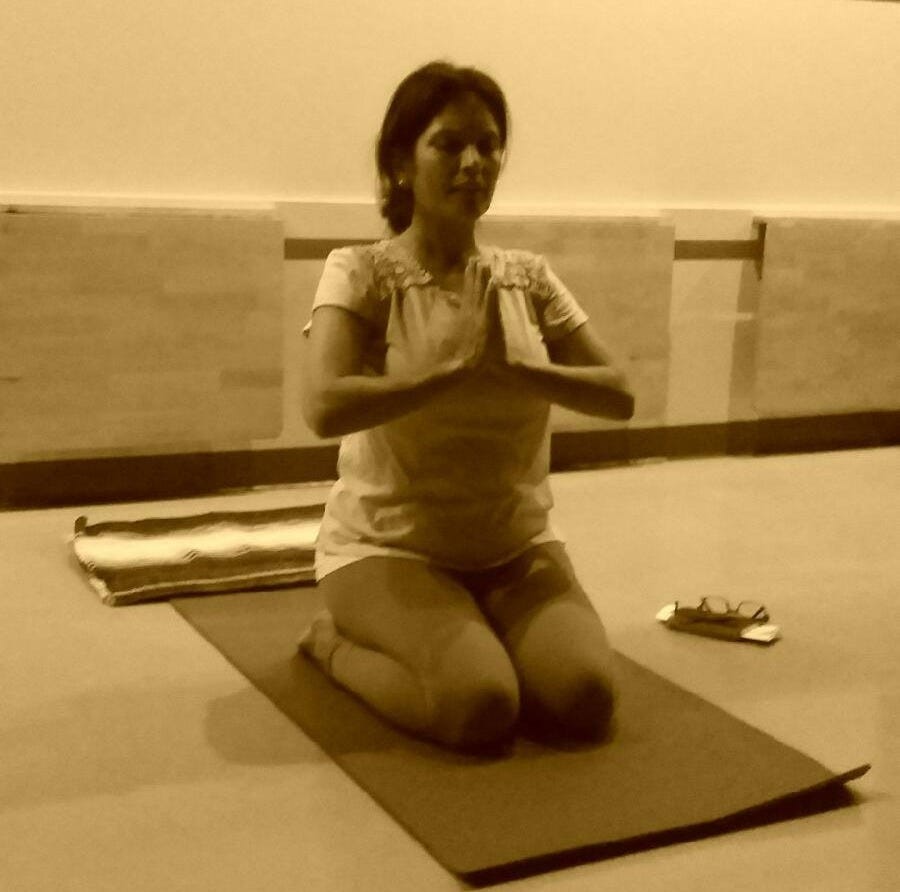
I have even taught it.

I know what it means to embody attention — to know the difference between effort and strain, between allowing and forcing.
I’ve sat in Vipassana meditation and experienced its mental purification through self-observation. No movement, no music, no escape from your thoughts. Just watching. Just noticing. Just observing what is happening inside you, moment by moment.

I have done all of this. For years. Earnestly. With commitment and conviction.
And yet, somehow, I still ended up here — alone in a hotel room in Mumbai, staring at MRI results I could barely absorb, a 21-day cancelled retreat, and a doctor telling me I needed surgery. Immediately.
How did my body betray me?
3am Questions
Anger, for me, arrived as frustration. As a relentless, circular interrogation that played on repeat throughout every sleepless night.
I had been so present. So committed to the practice.
I kept asking myself – if all of this practice is supposed to make you more attuned, more aware, more awake, and more mindful — how did I end up here?
You can listen carefully, practice diligently, live with genuine intention, and still miss things. Still override what you know to be true in your gut. Choosing, again and again, to keep moving when it might be better for you to pause.
Likely, I had noticed them.
Maybe, the signals were coming through loud and clear.
Probably, I just didn’t want to listen.
What My Body Was Saying
I had piriformis syndrome, a meniscus tear in my knee, and a full ACL rupture. There was also spinal stenosis – where your spinal canal narrows and begins to press on the nerves that run through it. There were bone cysts. Compression. Degeneration.

And my body had been announcing all of this, in the only language bodies have – with feeling and sensations.
I couldn’t walk down the stairs. Couldn’t climb up them either. Sitting for any length of time sent pain shooting through me. Standing hurt. Walking hurt. Sleeping brought no relief — just a different configuration of pain. Muscle spasms I could neither predict nor control happened in places I didn’t even know could spasm. Spinal compression was impacting my digestive system, causing problems with the most fundamental of biological processes.
Tingling in my leg began. And with it, sensation started to leave. It didn’t happen all at once, but feeling was withdrawing the way light does at the end of a long day. Slowly and surely, I was losing the ability to feel my own body.
Overall Fine
I started with a physiotherapist. Not because someone sent me, but because that’s how I operate. I identify the problem, I find the solution, and I get to work.
PT strengthened both sides of my leg. They were consistent, disciplined sessions. What nobody knew — because nobody had looked inside — was that we were strengthening a structure that was collapsing from within.
When I finally went to the doctor, they took X-rays. But X-rays show bone. They don’t show soft tissue. They don’t show what is happening inside a joint or what is pressing on a nerve. The doctor looked at the images and said: things look good.
I told them…Something is wrong.

They looked at their X-rays and dismissively said: looks overall, fine.
A part of me, and this is the part that belongs to the previous stage, to denial, accepted it. Accepting “overall fine” meant I could keep going.
And keeping going was what I knew how to do, so I was appeased for a while.
Eventually, knowing something was wrong, I pushed for an MRI. I insisted. By the time anyone actually looked inside, my meniscus was destroyed. My ACL was damaged. My spine was compressed in ways that were affecting my nervous system.
Months. I’d spent months strengthening a body that was falling apart from the inside out.
In that Mumbai hotel room, anger raged in every direction. I was furious at the healthcare system, yes — for not looking sooner. Mad at the doctor who minimized my pain. Frustrated with the health insurance requirements in the US that make receiving authorization for advanced medical imaging almost as rare as winning the lottery.
But I was also angry at myself. I’d been making choices too. I’d accepted fine when every instinct was telling me otherwise. I’d participated in my own form of denial, and that made me angry too.
Questions Without Answers
And so the 3am questions came. Night after endless night.
How many times did my body remind me? I’ve spent twenty-five years learning to listen. I’ve sat in silence for hours learning to notice. How did I not hear this?
And then the question that cut deepest of all — the one that felt almost too painful to consider:
How did the universe not guide me? Why did the divine choose to lead me here - to this room, to these results, to this reckoning?
I had no answer. I still don’t, entirely.
But I have learned that anger doesn’t just look for someone to blame, it searches for the truth. And the truth here was complicated. The healthcare system could have looked sooner. I could have stopped sooner. Denial had been a choice I made, over and over, at every trail and every airport and every PT session.
Anger wanted someone to blame — a single moment, a single choice, a single person responsible. Grief refused to give me that.
It doesn't move in a straight line. It circles back. It sits with you in the mess.
What Anger Can Look Like
Elisabeth Kübler-Ross named this stage anger. But, we often imagine anger as something loud. A slammed door. A raised voice. Unmistakable and undeniable.
This didn’t feel like that.
The way I experienced anger felt like lying awake in a hotel room in a city that wasn’t mine, while replaying every hike, every PT session, every decision, searching for the moment I could have changed the outcome.
It was frustration turned inward and sharpened into something harder.

Anger is not always something we project outward towards others. Sometimes it sounds like, why didn’t I know better? Sometimes it shifts towards the heavens and pleads, why did you let this happen to me? Anger tries to find someone or something to hold responsible because holding yourself completely responsible is more than you can bear.
All of it is anger. All of it is valid. All of it deserves to be named and examined.
I’d spent decades learning to feel everything, and now I was having to feel this.
There was a terrible irony in that.
The Taxi Was Still Running
Downstairs, I finally sent the taxi away. The three-week retreat was canceled. Next steps were still being formulated.
But before any of that could be faced, there was this. This cold, soulless hotel room. The warm, sleepless nights. Outside, the Arabian Sea gently lapped the shore, eternal and indifferent.
Kübler-Ross mapped these stages, but she never promised they would arrive once and leave cleanly. Anger came back when I thought I had moved past it. Denial returned when I thought I had made peace. The stages are real. The sequence is not.
Grief has its own timeline. Anger manifests distinctly. The most mindful thing you can do is not to rush past either one. You can’t perform your way through anger or pretend it doesn’t exist. You can’t negotiate with it until it agrees to disappear.
Just stay. Just feel it. Just let it be.
As complicated, as contradictory, and unresolved as it is.
That, I have come to understand, is the work.
Mindful Minute: Have you ever had your body speak to you so clearly yet found yourself not ready to listen? And if you’re willing — share it in the comments. Someone else is lying awake. Your words might be exactly what they need to read.
This is the second in a five-part series exploring the stages of grief through a personal lens. If this resonated, please share it with someone who needs it. And if you missed Stage One — Denial — you can find it here.
If this piece touched something raw, I want to gently say: please don’t navigate it alone. I write from my own experience and from my coaching practice, but I am not a therapist, and this is not a substitute for professional support. If you’re navigating grief, a health crisis, or a season that feels unmanageable, a licensed counselor or therapist can offer support.