

It’s July 31st, 2023. I am seated uncomfortably on a small propeller plane from Leadville to Leadville, Colorado, the highest town in the United States. I was there for a series of high-altitude hikes. They were to help acclimate my respiratory and cardiovascular systems for an upcoming trek to Everest Base Camp in the Himalayas. This was a goal I had worked hard toward, for a very long time … and it was finally coming true!
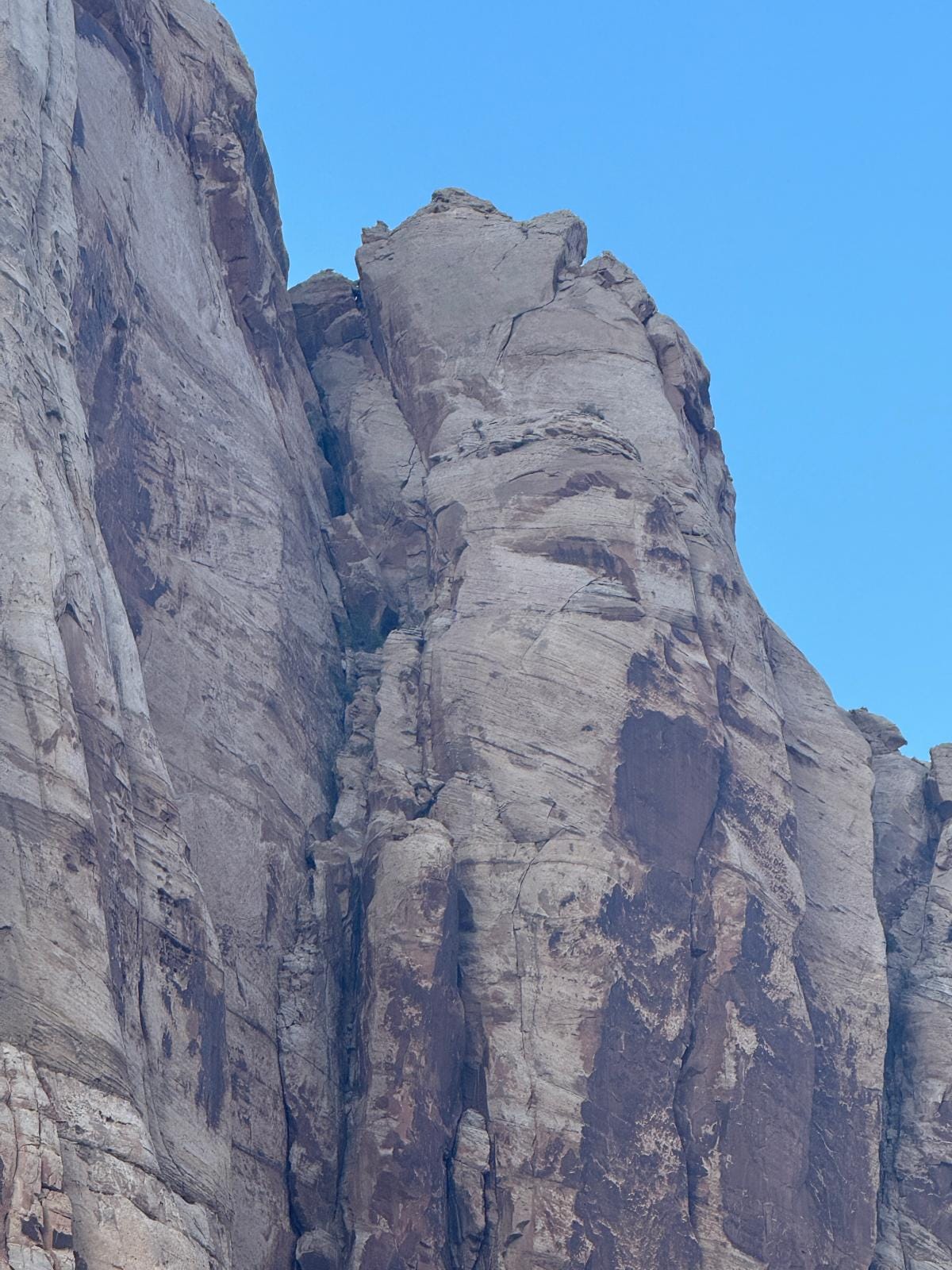
Just the day before, I’d been hiking Mt. Elbert - one of the highest peaks in Colorado at over 14k feet, very nearly reaching the summit. But that was when something in my hip just kind of snapped.
Something Snapped
The descent was filled with pain; my hip felt like it was on fire. But I made it down on sheer will and determination. So, throughout the flight, I shifted from one side to the other, unable to find relief. I could barely endure being seated.
Of course, I consulted with a doctor right away, and the diagnosis was clear. Piriformis syndrome – no hiking for at least six weeks. Well, this wouldn’t work!
The Math Doesn’t Math
I was leaving for Kathmandu at the end of the month. The trek to Everest Base Camp, a lifelong dream, was about to start in just seven short weeks. The team I’d been training with for months was counting on me. The time away from important employment-related activities had been carefully negotiated.
I nodded politely at the doctor, while mentally packing my bag, calculating altitude breaks, staging timelines, remaining PT appointments, while considering whether pain could be made to disappear entirely… if only the need was strong enough.
I did reach my goal. I made it to Everest Base Camp.
But, every day, every step, every breath was a negotiation. At the time, I called it resilience. Looking back, I wonder if it was denial. Denial is, of course, Stage One.
A Familiar Negotiation
Years later, after another intensely eventful season of life, we’d planned a ten-day trip through Utah’s Mighty 5.
By now, pain management had become familiar. Daily negotiations normalized. In Zion, I was not only negotiating with my body but with the strikingly majestic scenery. There was reverence. Spirituality. Cathedrals sheltering the pilgrim – gods to be encountered — found in the red rock rising from the burnt umber desert floor. Sandstone cliffs, millions of years old, beckoned to me, inviting me into their embrace — it was all too much to resist.
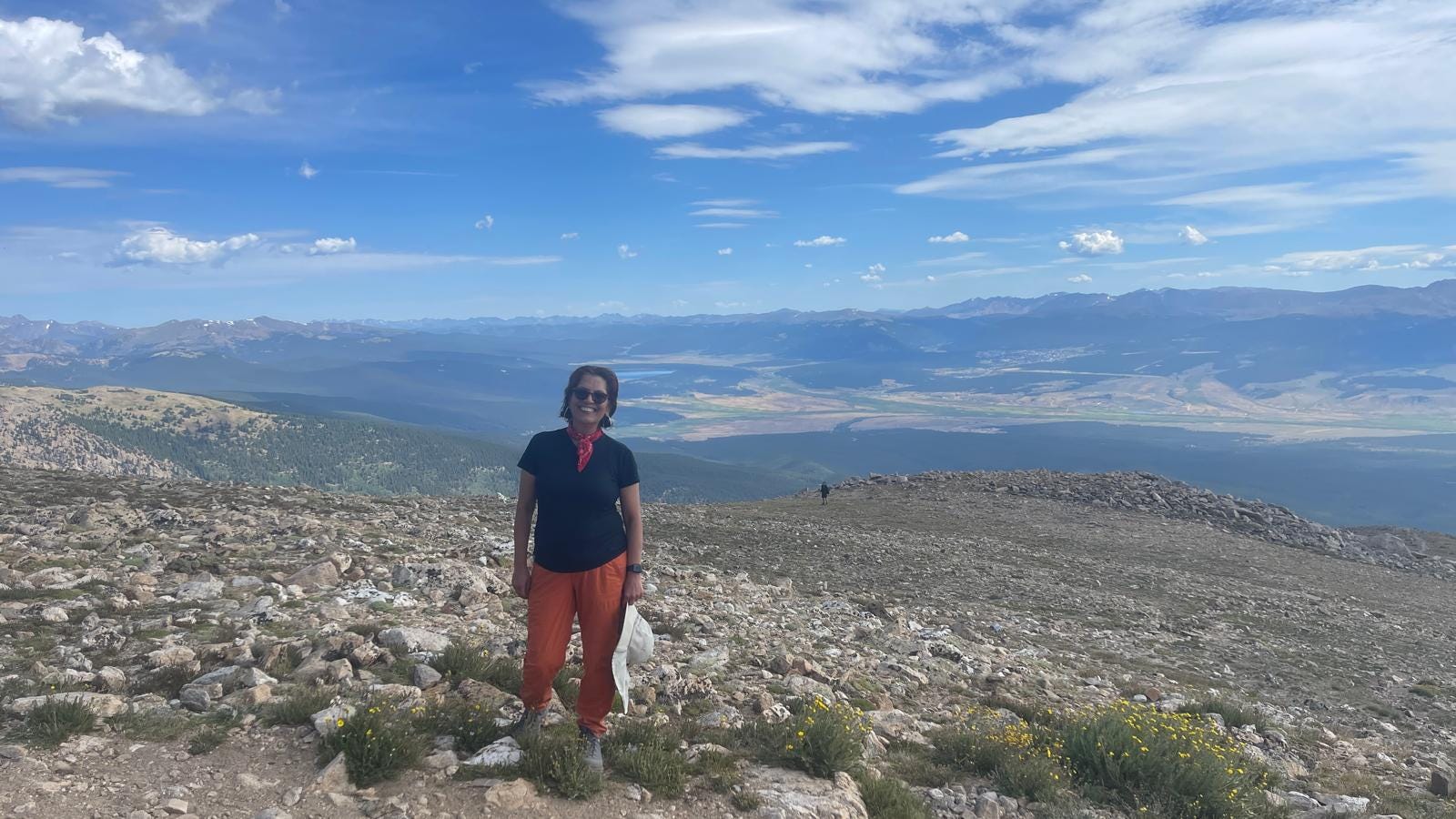
We tackled Angel’s Landing, a strenuous hike rising 1,500 vertical feet along a narrow ridge equipped with a chain rail for safety.
At Arches National Park, we hiked through Devil’s Garden, scrambling gingerly over sandstone bridges. I remember pausing on one of those ancient spans, looking out over the vast alien landscape, and feeling a mix of awe and stubbornness — willing myself to go on. That stubbornness is what got me out of the garden.
A Life of Negotiation
I was not simply hiking through Utah’s Mighty 5. I was hiking through a whole, lifelong negotiation with myself. One about worthiness, personal strength, and the realization that perhaps, I didn’t know how to stop.
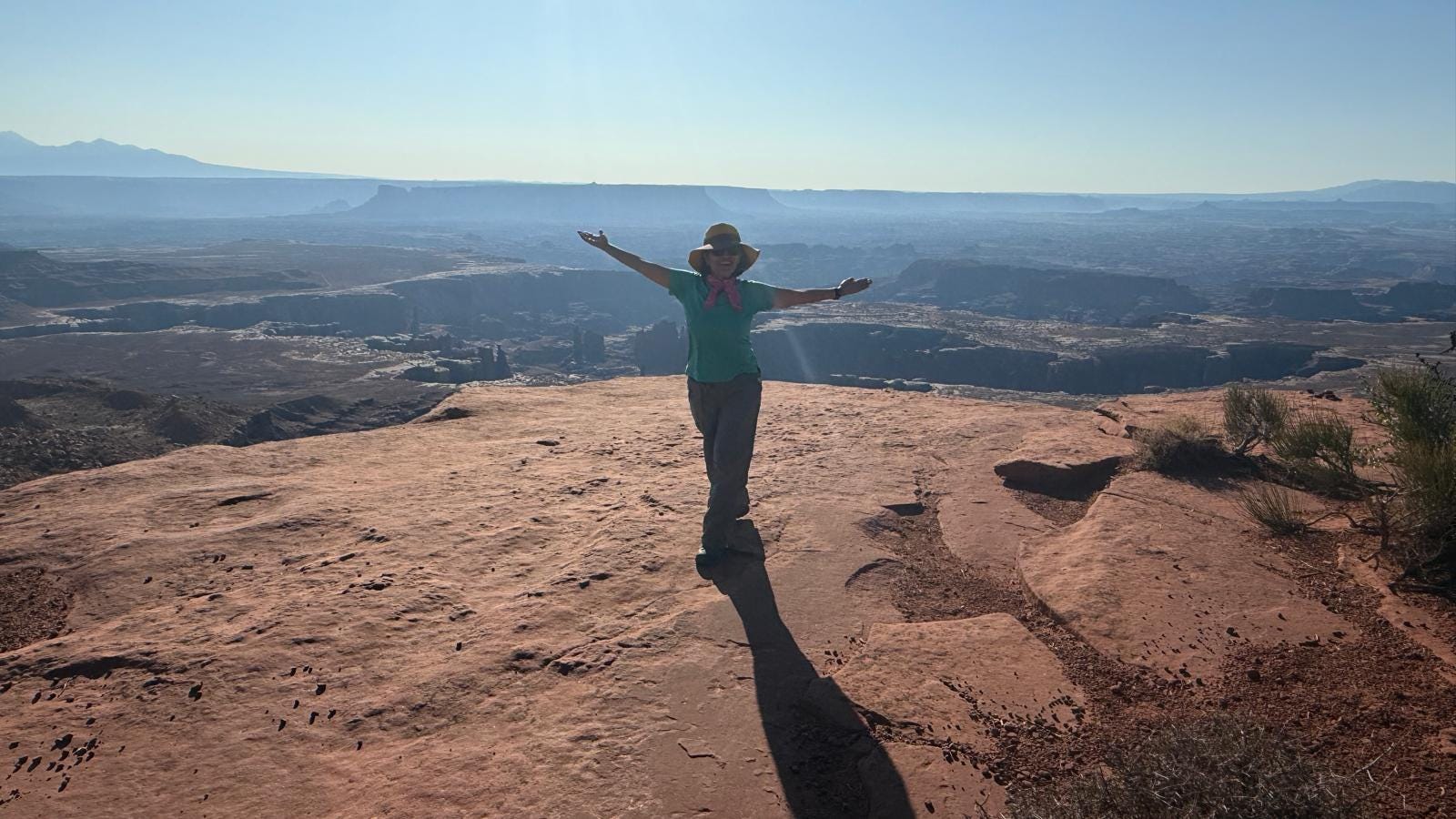
Early conditioning taught me that endurance was a virtue. That stopping was a weakness. That strong people pushed through. And I was resilient. I was one of the strong ones. So many self-help books had taught me that resilience was built from discipline and self-denial.
At the time, I believed the lesson was about courage. I even wrote a Substack post about it. Instead, I think I had become very good at denial.
It was…always minimized…
Just inflammation.
Just overtraining.
Just my age.
Just temporary.
Just something to negotiate.
Just something to manage as I continued my passion for hiking and exploration.
The Last Straw
When I returned from Utah last fall, it was obvious my condition had worsened. Even going up stairs required a strategy. Sitting too long hurt. Standing and walking hurt, too. Relief wasn’t even possible when sleeping. I was having muscle spasms in places I could neither predict nor control. My body was stripping away every illusion of functionality.
So, I did what I knew best — more research, more discipline, more adaptation, more mindfulness. I stretched more, strengthened more, recovered better, and pushed myself. I found the right experts. I advocated for my health. I navigated healthcare systems in two different countries and health insurance in the hardest one of all. Yes, part of me still believed this was a problem I could solve.
Remembering How to Heal
I had booked a yoga and ayurveda retreat on the Indian coast many months ago for the turn of the year. Determined to keep this commitment to myself, I just knew it would propel me back into better health. I told myself that through slow, gentle grace, with kind pampering, rejuvenating daily massages, and conditioned mental reset, that I would be healed. I reassured myself that if I could just get there, if I could just make it to the retreat, that my body would remember how to heal itself once again.
The Results Came
Before leaving for India, I got an MRI to get a better sense of the problem, but without serious consideration for any implications of the outcome, I flew to India before the results had even arrived.
If I’m being honest, the 18-hour journey there was brutal. I sat on hot water bottles, generously provided by caring flight attendants, trying to dull the sharp, shooting pain with little relief.
Just a few days later, I walked ever-so-slowly along Juhu Beach in Mumbai, inviting the New Year and all that was to come with eagerness and open arms.
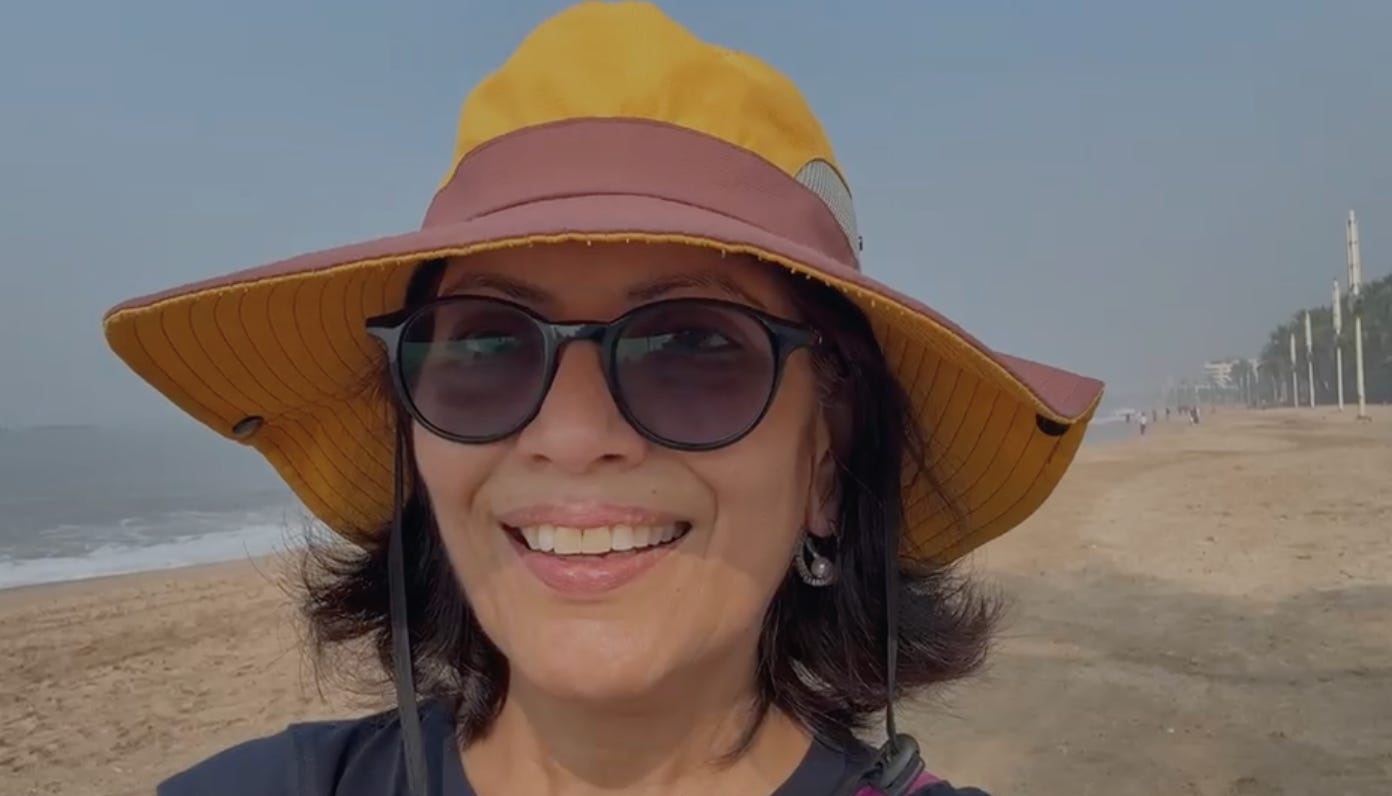
And then, the MRI results came.
Everything Shifted
I remember exactly where I was when I got them. I opened the report on my phone in the hotel room the morning I was supposed to leave for my special retreat.
Suddenly, everything shifted. The taxi that was supposed to take me to the 21-day Ayurvedic and yogic retreat was downstairs with its engine running. The retreat was supposed to begin in just a few short hours.
As I read through the MRI report, the medical terms sort of seemed to jump out at me.
Degeneration. Compression. Bone cysts. Impingement. Spinal stenosis. Complex meniscus tears. ACL damage in the knee.
Time Will Tell
I stared at the screen for a while before calling the doctor at the retreat center. The conversation went a little something like this:
Could I still come? No. I wrote it down. Taking notes, as if the act of writing it would make the facts of the matter less painful to bear.
Would the program help? Not when you’re injured. Of course not. Of course not. I thanked him and kept on with my line of questions.
Should I rest instead? Yes. Rest. Hmmm… I had never been very good at rest. I knew the importance of operationalizing pause. Wrote and taught about it even. But I still wasn’t very good at it.
Could it even be healed? Time will tell. I held the phone in my hand for a moment after we hung up. The room was still. Downstairs, the taxi driver was still running the meter.
Even when presented with undeniable evidence, a part of me clung to denial. Denial that anything was really all that wrong. Denial that I wouldn’t be able to heal myself with a focused and restorative retreat.
Mindfulness in the Messy Middle
I kept the taxi driver waiting for over two hours(!) while I negotiated with myself. I was holding onto dreams that no longer matched my reality. I stubbornly believed that I could will myself back into the life and into the healthy body I had before. And that was the beginning of my latest journey with grief.
In this five-part series, we’re going to explore how a medical diagnosis can shift perspective. We’ll consider how this experience mirrors the Kubler-Ross 5 Stages of Grief, and together we will explore ways to practice mindfulness, even while still in the messy middle.
Mindful Minute: Have you seen denial show up in your life or in that of your loved one? Comment below to share your experience – someone else might benefit from your reflection.
p.s. This post is the first in a series of five as we explore the stages of grief together and learn how they can impact our lives. Stay tuned for another post next week. If this resonated with you, please share it with a friend!
If this piece touched something raw, I want to gently say: please don’t navigate it alone. I write from my own experience and from my coaching practice, but I am not a therapist, and this is not a substitute for professional support. If you’re navigating grief, a health crisis, or a season that feels unmanageable, a licensed counselor or therapist can offer support.